
 (780) 433-0222
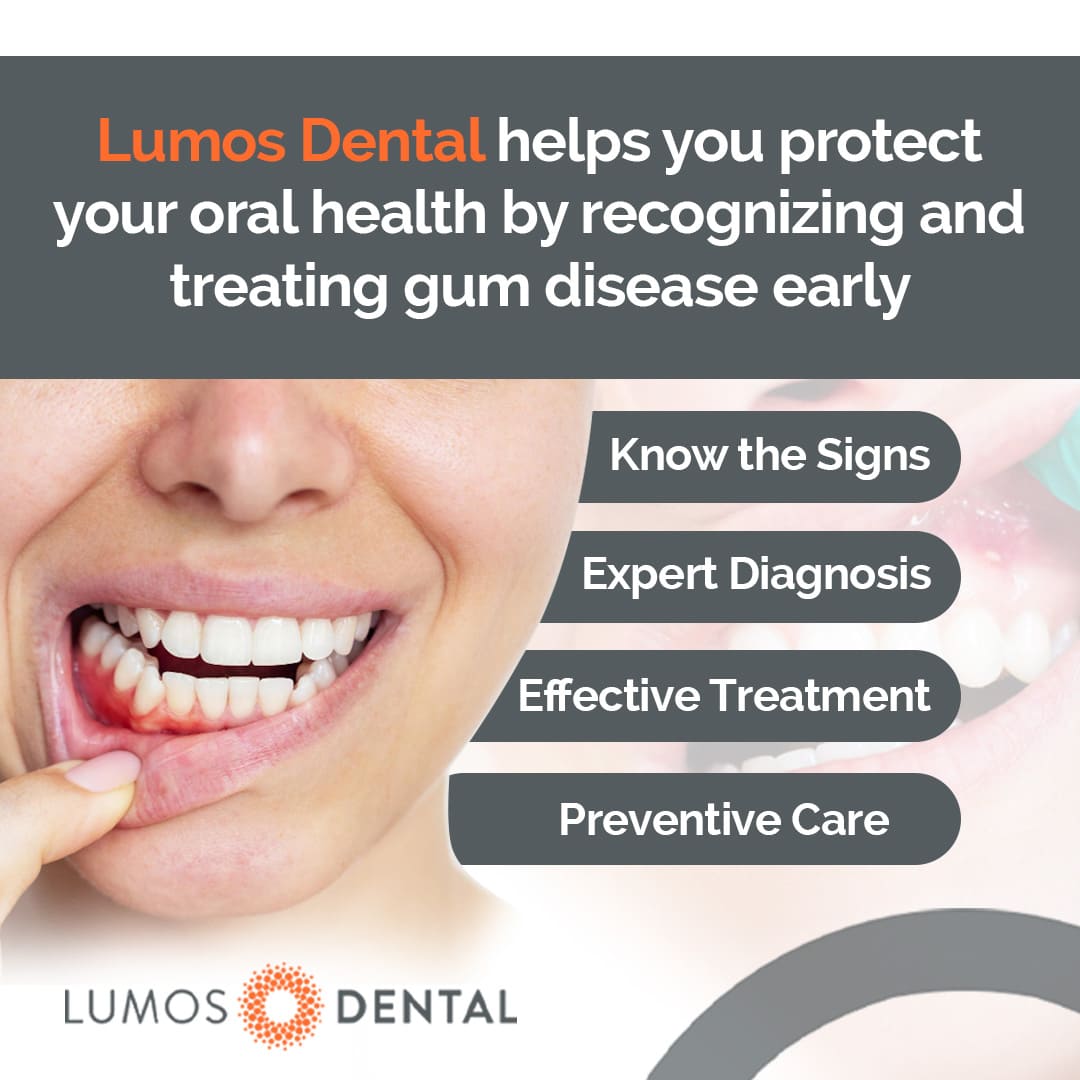
Gum health plays a key role in your overall oral wellness, yet many people overlook early warning signs. At Lumos Dental, we help you recognize the signs of gum disease before they escalate into serious problems. Periodontal disease, also known as gum disease, can develop quietly and affect your teeth, gums, and jawbone. Understanding the gum disease cause, from plaque buildup to lifestyle factors, helps you take action early. If you notice bleeding, swelling, or persistent bad breath, these are indicators that professional attention may be needed.
A dentist for gum problems can evaluate your condition and recommend the right plan, ranging from preventive care to more advanced gum disease symptoms and treatment. Acting promptly can protect your smile and prevent tooth loss, bone damage, and infections. As a trusted Edmonton dental clinic, we provide trusted care for patients of all ages, guiding you through every step of treatment with clarity and precision.
What Gum Disease Is and Why It Happens
Gum disease can develop quietly, and many people do not notice the early signs until the infection has progressed. Being aware of the causes and stages of gum disease can help you take action before it affects your teeth and gums severely.
Definition of Periodontal Disease
Periodontal disease is an infection that affects the gums and the bone supporting the teeth. It occurs when bacteria collect along the gumline and create plaque, which eventually hardens into tartar if left untreated. Over time, this infection can inflame and damage the gum tissue, and in advanced stages, it can erode the bone holding your teeth. According to the Canadian Dental Association, seven out of 10 Canadians will develop gum disease at some time in their lives. Identifying the gum disease cause early allows you to address the infection and maintain your oral health.
Main Gum Disease Causes
Gum disease starts when harmful bacteria remain on teeth and gums. These bacteria create plaque, which irritates gum tissue and turns into tartar if not cleaned professionally.
The main causes include:
- Poor oral hygiene – Skipping regular brushing and flossing allows plaque to build up along the gumline.
- Plaque and tartar buildup – Hardened deposits irritate gums and provide an environment where bacteria thrive.
- Smoking – Tobacco use decreases blood flow in the gums, reducing your gums’ ability to fight infection.
- Medical conditions – Chronic illnesses like diabetes or autoimmune disorders can weaken your body’s response to infection.
- Hormonal changes – Pregnancy, menopause, and puberty can make gums more sensitive and susceptible to inflammation.
Early vs. Advanced Gum Disease
Gum disease begins as gingivitis and can progress to periodontitis when untreated. Gingivitis is the early stage and usually causes redness, swelling, or mild bleeding, but does not affect the bone. If left untreated, the infection can advance to periodontitis, where the bacteria attack the deeper tissues and jawbone, causing receding gums, loose teeth, and potential tooth loss.
Early Signs of Gum Disease Most People Miss
Gum disease often begins quietly, without obvious discomfort, yet it can slowly damage your gums and teeth over time. Recognizing early signs gives you the chance to act before the problem worsens.
Common Symptoms
Early gum disease symptoms are mild but indicate infection forming at the gumline. At this stage, you might notice small changes in your oral health that could otherwise go unnoticed. For example, bleeding while brushing or flossing can signal irritation caused by plaque buildup.
Other signs of gum disease include:
- Bleeding gums – Gums may bleed when brushing or flossing, even lightly. This is often one of the first indicators of gingivitis.
- Swollen or tender gums – Gums may feel puffy or sore, signaling inflammation.
- Chronic bad breath – Persistent bad breath can result from bacterial buildup along the gumline.
- Gum irritation during brushing – Discomfort while cleaning your teeth may point to early infection.
Symptom Comparison Table (Gingivitis vs. Periodontitis)
| Symptom | Gingivitis | Periodontitis |
| Bleeding gums | Common | Common |
| Swollen gums | Mild | Moderate to severe |
| Bad breath | Occasional | Persistent |
| Gum recession | Rare | Common |
| Loose teeth | No | Yes |
| Bone loss | No | Yes |
This table helps you identify whether your symptoms are consistent with mild gingivitis or more advanced periodontitis. Early attention can prevent irreversible damage.
When Symptoms Become More Serious
Symptoms become more serious when gum changes affect tooth stability or gum position. If your gums start to recede, teeth feel loose, or you notice persistent swelling and pus, the infection has likely spread deeper. These signs indicate that bacteria have reached the tissue and bone supporting your teeth. Visiting a dentist for gum problems promptly allows for proper evaluation and treatment to stop further progression.
At Lumos Dental, we guide patients through the early detection and management of gum disease. By identifying the warning signs quickly, we help preserve your smile and protect the underlying structures that support your teeth.
Advanced Gum Disease Warning Signs
As gum disease progresses, the damage moves beyond mild irritation and starts affecting the structure of your teeth and jaw. Recognizing these warning signs early can help you act before permanent damage occurs.
Receding Gums
Receding gums occur when infected tissue pulls away from the teeth. This exposes the tooth roots, which are more sensitive to temperature changes and prone to decay. If you notice your gums appearing thinner or your teeth looking longer, it could be a sign that your gum tissue is deteriorating.
Loose Teeth
Teeth become loose when infection weakens the bone that supports them. The bone that holds teeth in place can gradually deteriorate due to untreated periodontal disease. Once teeth start to feel mobile, it usually indicates advanced damage, making professional care from a dentist for gum problems necessary to prevent tooth loss.
Gum Infection Indicators
Pus, severe swelling, and constant pain suggest active gum infection. These are not signs that will improve on their own. Persistent inflammation can allow bacteria to spread deeper, affecting not just your gums but your jaw and overall oral health. Visiting a dentist near you promptly can stop the infection from worsening.
Bone Loss Risks
Bone loss occurs when long-term infection destroys the supporting jawbone. This can lead to teeth shifting, gaps, and eventual tooth loss. Early treatment can slow the progression, but once significant bone has been lost, restorative procedures may be needed.
Gum Disease Symptoms and Treatment Options
Gum disease can develop quietly, often without obvious pain at first. Identifying symptoms early and seeking proper care can help you protect your teeth and gums before the infection progresses.
Professional Diagnosis at a Dental Clinic
A dentist can diagnose gum disease using gum measurements, X-rays, and clinical checks. During your visit, a dentist will measure the depth of the spaces between your gums and teeth, known as periodontal pockets. Healthy gums typically have pockets measuring 1–3 mm. Pockets deeper than this may indicate infection. X-rays can reveal bone loss caused by advanced periodontal disease.
These evaluations give a clear picture of how far the infection has progressed and help determine the best approach for your treatment. Acting early allows your dentist to address gum disease symptoms and treatment effectively and may prevent the need for more invasive procedures later.
Non-Surgical Treatment Options
Non-surgical treatments remove bacteria and reduce inflammation around the teeth. For early to moderate gum disease, these treatments can restore gum health without surgery.
Options include:
- Scaling and root planing – This deep cleaning removes plaque and tartar below the gumline. It also smooths the tooth root to help gums reattach.
- Medication support – Dentists may prescribe antimicrobial rinses, gels, or oral antibiotics to target infection and reduce inflammation. This supports the healing process and helps prevent bacteria from returning.
Surgical Treatment Options
Surgical treatments are used when gum disease damages deeper tissues or bone. If non-surgical methods do not stop the progression, surgery can restore the gum structure and protect the teeth from further damage.
Options include:
- Periodontal surgery – This procedure cleans bacteria from deep pockets, reshapes damaged gum tissue, and can reduce further bone loss. It is often recommended for patients with moderate to severe periodontal disease.
- Gum grafting – When gum tissue has been lost, a graft can replace it and cover exposed tooth roots. This procedure reduces sensitivity and protects the teeth from decay and further tissue damage.
At Lumos Dental, our team provides personalized care to manage gum disease symptoms and treatment. We guide you through each step, explaining options clearly and helping you restore your oral health effectively.
Why Lumos Dental is a Trusted Dentist in Edmonton for Periodontal Care
Finding a dentist who can manage gum disease effectively can make a real difference for your oral health. Lumos Dental combines experience, patient-centred care, and flexible options to help you feel supported at every step.
Experience in Treating Periodontal Disease
We provide diagnosis and treatment for all stages of periodontal disease. The team evaluates each patient carefully, using methods supported by clinical evidence to guide treatment. You can expect a thorough assessment that looks beyond symptoms to the root of the problem. Whether your gum disease is in its early stage or has progressed further, they create a treatment plan that addresses the condition efficiently. Patients searching for a dental clinic near you can trust the team’s expertise in managing both mild and advanced periodontal concerns.
Comfort-Focused Care for Families in Edmonton
We offer a calm and supportive environment for families seeking gum disease care. The clinic prioritizes your comfort, making every visit less stressful. Staff members take the time to explain procedures in simple terms and walk you through the process so you know what to expect. Children, teens, and adults receive care tailored to their needs, giving every family member attention and guidance. This approach has made us a preferred Edmonton dental clinic for families across the community.
Direct Billing, CDCP Acceptance, and Flexible Hours
We support direct billing, accept CDCP, and offer flexible hours for patient convenience. They recognize that visiting a dentist can be challenging for busy schedules, so the clinic provides options that fit into your life. You can book appointments without worrying about paperwork or coverage concerns, making it easier to get the treatment you need. Anyone seeking a dentist near you will find accessible, reliable, and professional care at Lumos Dental.
Book an Appointment With Lumos Dental Today
Take the first step toward healthier gums and a stronger smile by booking a visit with Lumos Dental. Lumos Dental serves Edmonton, AB T6C 0Z8, and our clinic is ready to provide expert care for all stages of periodontal disease. You can schedule your appointment by calling (780) 433-0222 or visiting our Contact Page. Whether you are looking for an experienced Edmonton dentist or a dental clinic near you, our team is here to guide you through your treatment and support your oral health every step of the way.

Dr. Taka Shah graduated from the University of Alberta Dentistry program in 2011 and is the owner of Lumos Dental in Edmonton, Alberta. He is passionate about lifelong learning and has pursued extensive postgraduate training to enhance his skills and knowledge. His clinical expertise includes sedation dentistry and advanced Invisalign techniques, supported by his active membership in the American Academy of Clear Aligners. Dr. Shah is dedicated to providing high-quality dental care and helping his patients achieve healthy, confident smiles.